I've lived in Ashland on and off for almost 10 years now. My wife and I moved our family here from Los Angeles just a few years prior to the Covid lockdown, but right after the Alameda fires we decided to try our luck out east and shipped the whole family to upstate New York for a couple of years. During that time, I did a lot of writing–for a while there I wasn't working full-time–and I made a concerted effort to embrace what I considered to be the regional music scene, that in my mind stretched from upstate New York, to Montreal, over to Ottawa and back down to Rochester.
It was then that the music of Lorkin O'Reilly landed on my radar. At the time he was temporarily based out of his parents' house near Albany. That was the summer of 2021. Just over a year later, I would write something about his collaboration with Melanie McLaren. But then, the profile went silent. There was mystery in the air.
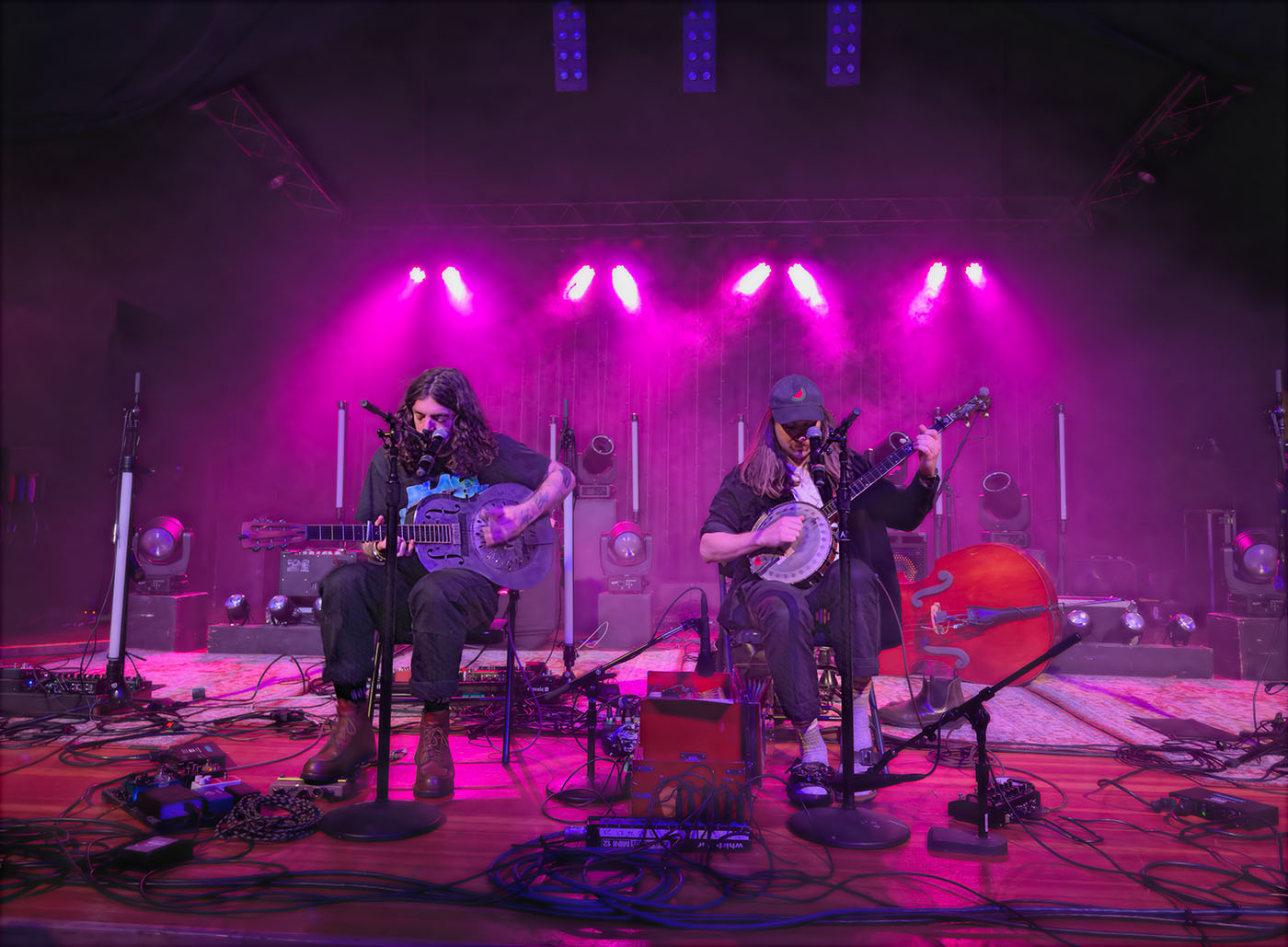
Lorkin had been traveling and found himself revisiting his old stomping grounds of Dublin. He returned to his birth-name of Conor, and co-founded the band DUG primarily as a vehicle for busking with his new friend Jonny Pickett. Conor ‘Lorkin’ O’Reilly is Scottish-born with a Dublin mother, and his love of roots and folk music traditions is no secret. Pickett hails from the central coast of California, and is known for his work with the 5-string clawhammer banjo. Together, O'Reilly and Pickett seamlessly extend the quirky, people-centric touch that comes from city busking into the modern setting of live music. The songs themselves shine as a perfectly intact through-line to the mid 20th century, having as much to do with the now-forgotten work of folk luminaries like Chris Whitley and Kelly Joe Phelps as they do with resonator legends like Son House and Blind Boy Fuller, and even modern blues-adjacent troubadours like Saintseneca. Like most timeless work, the songs of DUG remind us how little things have changed once we take a step back from the mercurial landscape of modern pop music. These are heartfelt songs with no agenda, which certifies DUG as a rare breed in the hallowed halls of Grammy-nominated roots music. Signing to Claddagh Records in April 2025 is what set them up for both the Grammy shortlist, and an extensive touring schedule.
What stood out to me in the early days of O'Reilly's solo music was the strength of his lyrical persona, and the understated gravitas of his baritone vocal. I am pleased to report that these virtues continue to abide, as Conor's capable embrace of a left-handed, custom 'Mule' resonator serves as a worthy vehicle for the forward movement and further cultivation of his vocal presence. As the quarter- and eighth-note strummings that are typical of a resonator in open tuning serve as a busy counterpoint to the melody, Conor's voice continues to embrace the items that will evolve into a sonic signature, of sorts–with hints at his Irish homeland, the emergence of a marked vocal fry, and topical explorations that have moved on from the low branches of abandoned love and measured self-searching to the higher-order matters of political resistance and recreational drug use.
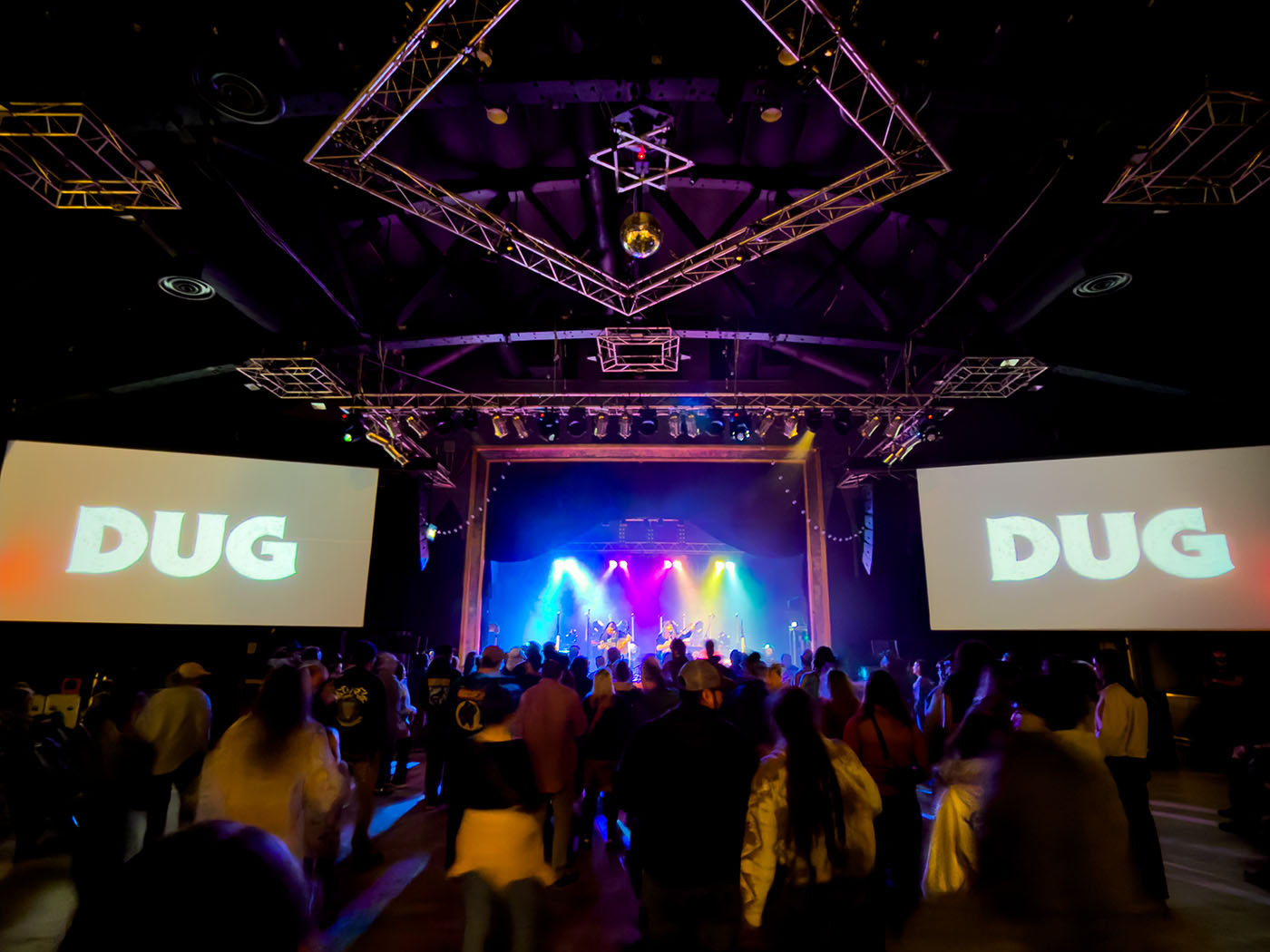
More than anything, what I came away with from DUG's live performance was the sense that everything is as it should be. Perhaps the world is in chaos, perhaps the future is unspeakably murky, but one thing can and should be acknowledged: the linguistic potency and emotional strength of O’Reilly's vocal gift is alive and well, benefiting both from the creative forge of consistent live performance, in addition to the adoption of slide guitar as his weapon of choice. Pickett and O'Reilly are well-matched, both in terms of personality as well as performance ability, and for anyone with a love of folk and roots musical history, and an appreciation for the blues, DUG's performance is a must-see. Never have I had the pleasure of watching two young roots artists slug away so capably at just a resonator guitar, a banjo, a kick drum pad, a harmonium, and a tambourine. In a world full of loop petals and auto-tuned five-part harmonies, DUG offers a fully analog experience. I'm still not sure how they got the harmonium to hold a note for so long, but Jonny assured me that it was a simple matter of removing some springs and taping the keys down. The entire show is a treasure of lo-tech artistry, which only serves to further legitimize their gritty performance credentials.
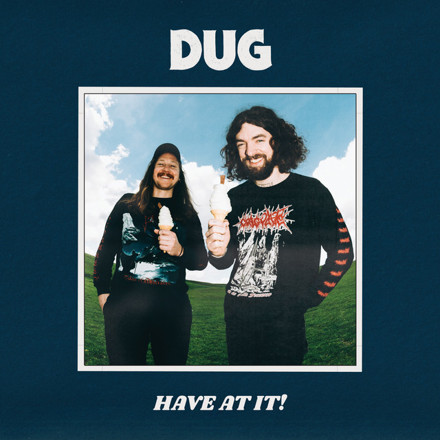
If it is a world that seems to move too fast, that seems to be always looking for shortcuts, and that seems to be enamored of artificial intelligence; if that's the problem, then DUG is the answer. A couple of chords, a few riffs, and some truth: that's all we've ever needed. And DUG is here to let us... HAVE AT IT!
More info about DUG can be found on their website or by visiting their Instagram profile.